Walking the West Highland Way
Recently, my wife and I completed the West Highland Way — seven days, roughly 96 miles, and more than a little bickering along the way. Somehow, despite all the challenges, it was one of the most rewarding experiences, so compelling that it drove me to write a long blog post (which I would not normally do), in the hope of removing any doubt from the mind of anyone considering the walk. We completed the walk in 7 days and stayed in a mix of hotels, hostels, and campsites along the way.
Day 1: Milngavie to Drymen
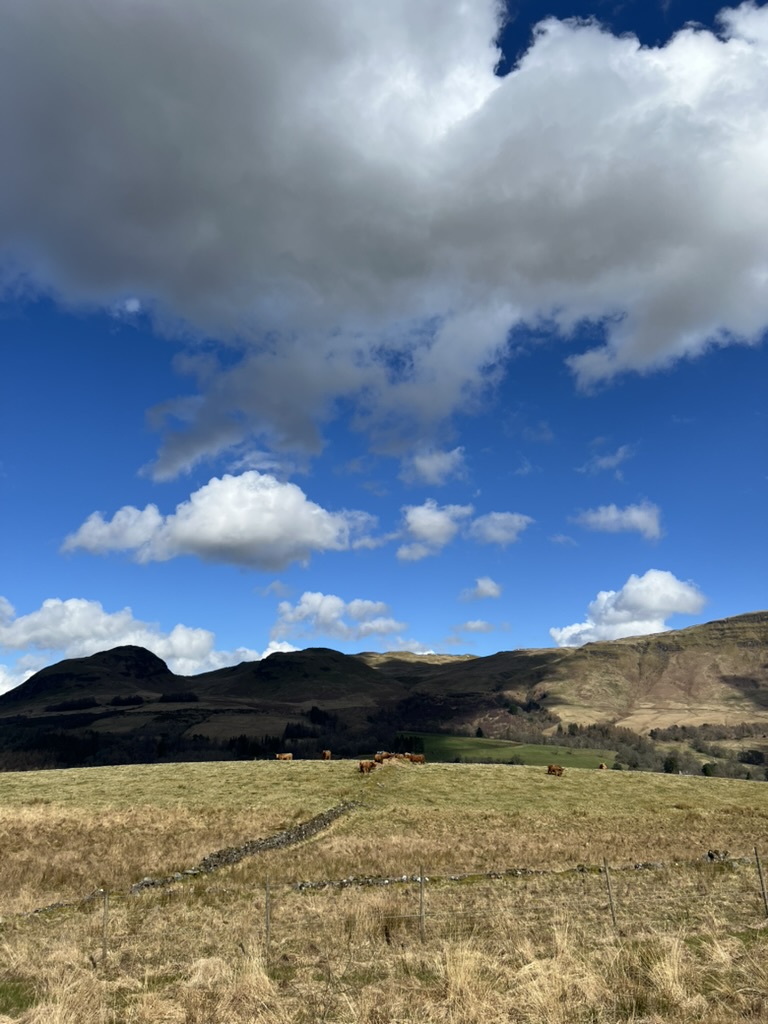
The first three days of the walk were unplanned, accidental even. I was attending a conference in Glasgow and my wife was visiting for the weekend. We had a few hours to kill on Saturday morning, and a quick search recommended a walk starting in Milngavie for a taste of Scottish scenery, so we decided to walk a few kilometres. We had no intention of doing more than that. The first few kilometres were immediately disarming. Quiet woodland paths, dappled light, other walkers with friendly dogs. Even the weather was close to perfect. So we kept walking.
Somewhere around the first hour, we made a silent agreement: let's do at least one full day of this and find out what we are made of. We didnt say much about our plan. The silence was probably because neither of us wanted to ask, "Do we actually have a plan?" If we had discussed it too much, we might have turned back, and secretly neither of us wanted that. As lunch hour approached, the immediate goal became reaching the midpoint of the day for lunch at Beech Tree Cafe, and that sounded like a good idea to both of us.
The food and the cafe were excellent, and by this point the sunk-cost fallacy had kicked in, so we were committed to the walk. By afternoon we were tired but also deeply relaxed, enjoying the woods and farm animals staring at us from behind fences.
Then the sky changed and the clouds rolled in. The wind picked up. The rain started. Not a drizzle, not a light rain, but a proper Scottish downpour that soaked us to the skin within minutes. We were drenched and suddenly worried, realizing at least one of our fears had come true. We found shelter outside what looked like a closed shop, but now we were stranded, far from any town, with no public transport and no idea how we would make it back to Glasgow.
Thanks to the long daylight hours in this part of the world, we waited for the rain to subside and completed the walk for the day. We made it to Drymen with just enough time to catch the last bus back to Glasgow. Soaked, tired, and somehow already talking about coming back to finish what we'd accidentally started.
The lesson for us: there is little public transport between stops on the WHW, and it helps to carry an umbrella.
Day 2: Drymen to Rowardennan
Day 2 started with us ignoring the lesson learned from Day 1. The difference was that this time our mistake was intentional rather than accidental. We knew where we were going, and we knew we could do it.
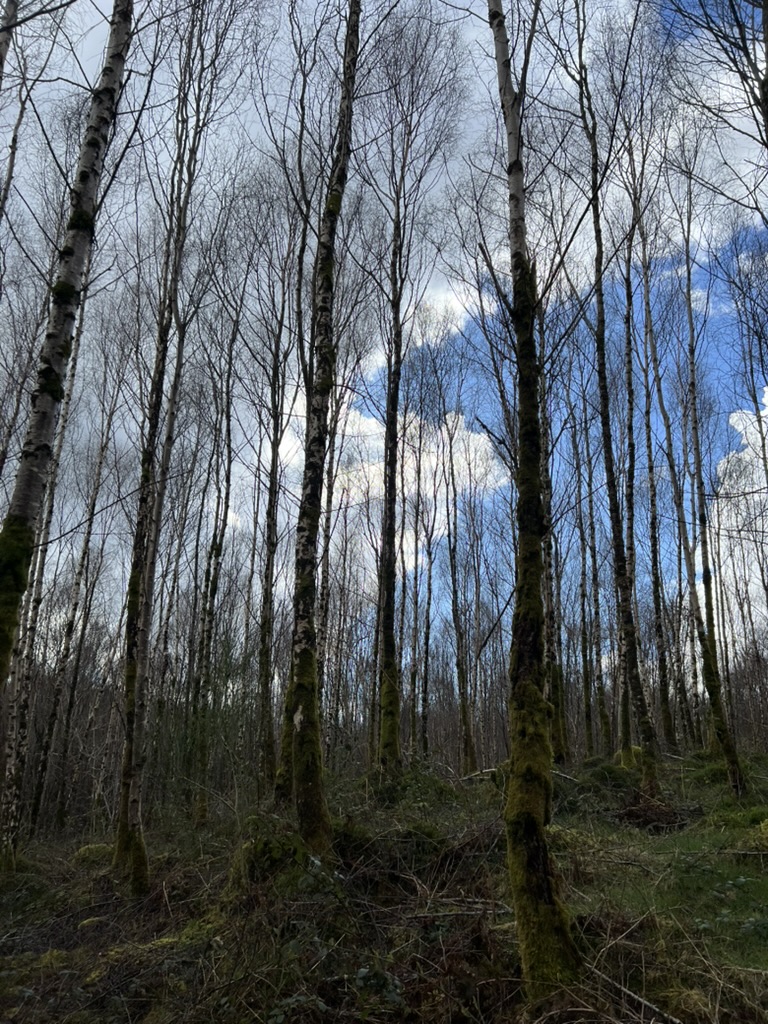
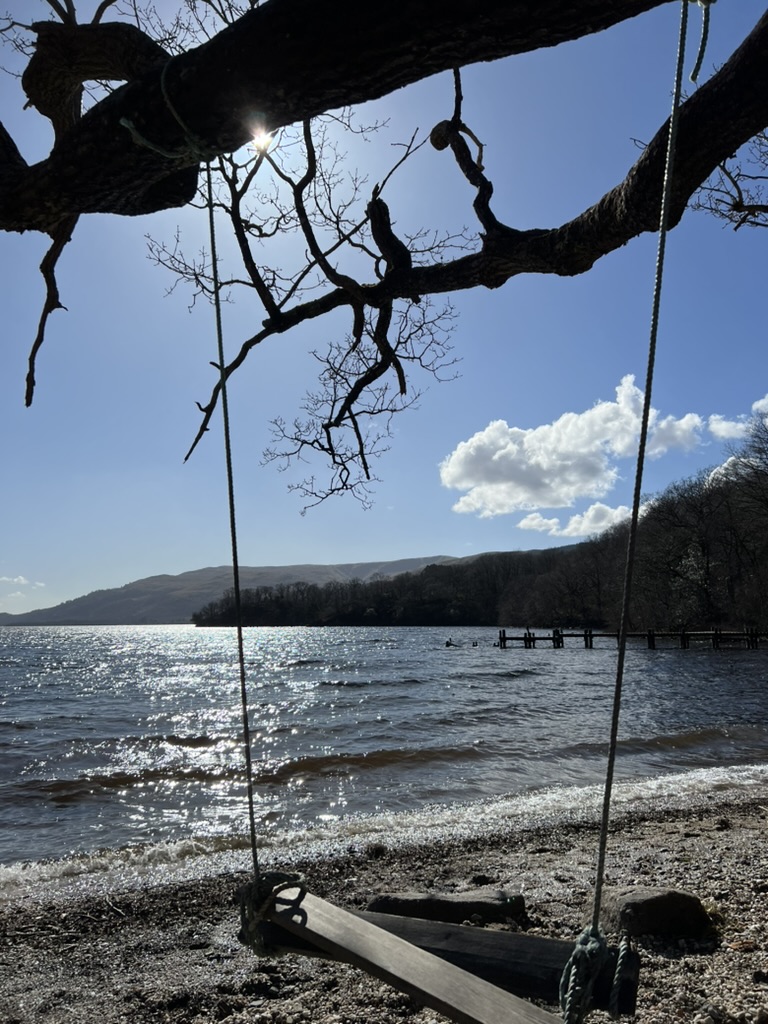
Having read more about the WHW, we knew this was one of the most scenic parts of the walk, offering views of the eastern shore of Loch Lomond. The path to Rowardennan follows the eastern shore and is easy and pleasant, with many other walkers alongside, and the loch earns every good word ever written about it. We passed farmland, curious cows with great haircuts, and stretches of path pleasant enough to make you forget that you are walking for hours. By 3:30 in the afternoon we were in Rowardennan feeling quietly pleased with ourselves (seemingly thinking we planned better this time).
Then we discovered what Rowardennan actually is.
It is not a town. One hotel. One restaurant. A car park. That's it. We were sweaty, hungry, and beginning to understand that we had made a serious error in not researching where we were heading.
We sat in the restaurant. We ordered food. We waited. And waited. Two and a half hours passed. No food arrived. Not even chips. The light outside began to fade and a quiet panic set in: there was no public or private transport out of Rowardennan. The nearest train station was miles away and walking back in the dark was not necessarily an inviting idea.
And then, through the restaurant window, we saw a taxi. We have the taxi driver to thank for what happened next. He was waiting for clients (who, like our food, were very late), but he saw us and our situation and he did not leave. He waited. And when his clients arrived, he took us with them to the nearest train station. His famous words: "We don't leave people hanging here in the north." Not only did he get us out of a bad situation, he also did not charge us for the ride. We were grateful beyond words, and we will never forget his kindness.
He drove us back to Drymen and then Alexandria, and we caught the last train to Glasgow.
Day 3: Rowardennan to Inverarnan
We came back prepared. Accommodation booked, expectations recalibrated, no illusions about what Rowardennan was. We set off knowing exactly where we were sleeping that night and nights following.
What it did not change was the terrain.
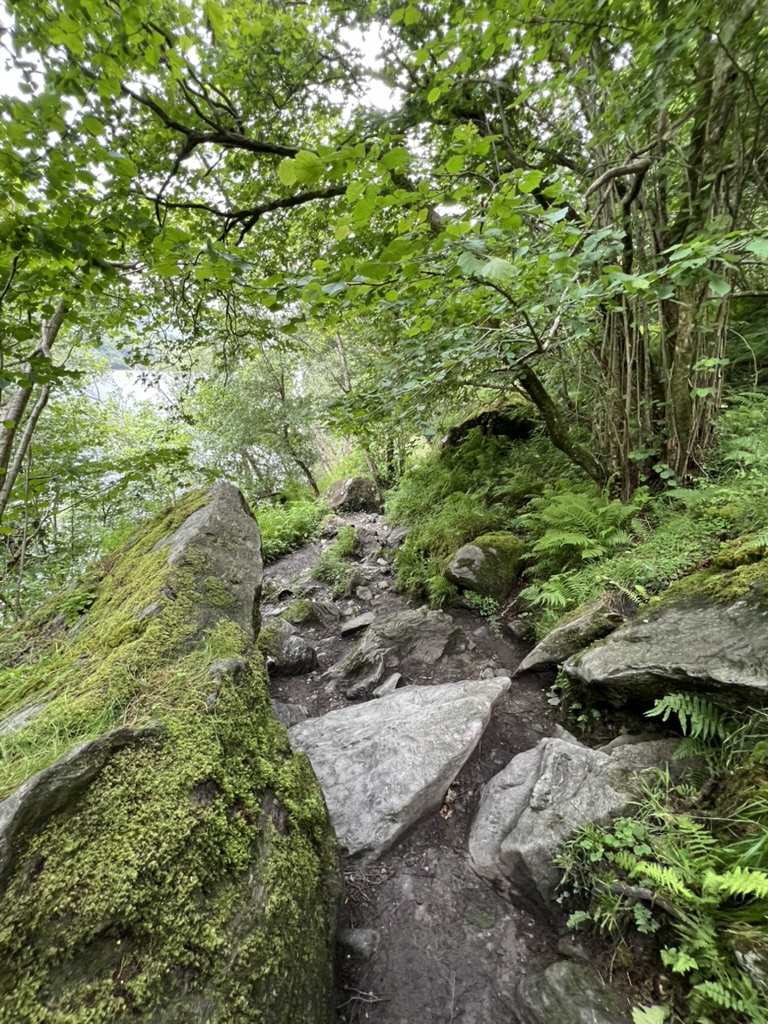
Rowardennan to Inverarnan was the hardest day on the West Highland Way. Compared to the first two days where we could not stop, here we could not move. And that was entirely because of the path: largely made of loose stones, arranged in something that resembles stairs. Each one presents itself as a puzzle. Which stone? Which angle? Which foot first?
Get it wrong and you are looking at a twisted ankle, bruised toes, or fingers that made an unfortunate introduction to Scottish rock. Get it right and you are rewarded with the next puzzle, ten centimetres higher. And if by some combination of skill and luck you navigate the whole thing without incident the blisters will find you anyway. This was the first day that unlike the previous ones, the end never seemed to come.
The wilderness here is genuinely wild, and it helps you forget how punishing the path is.
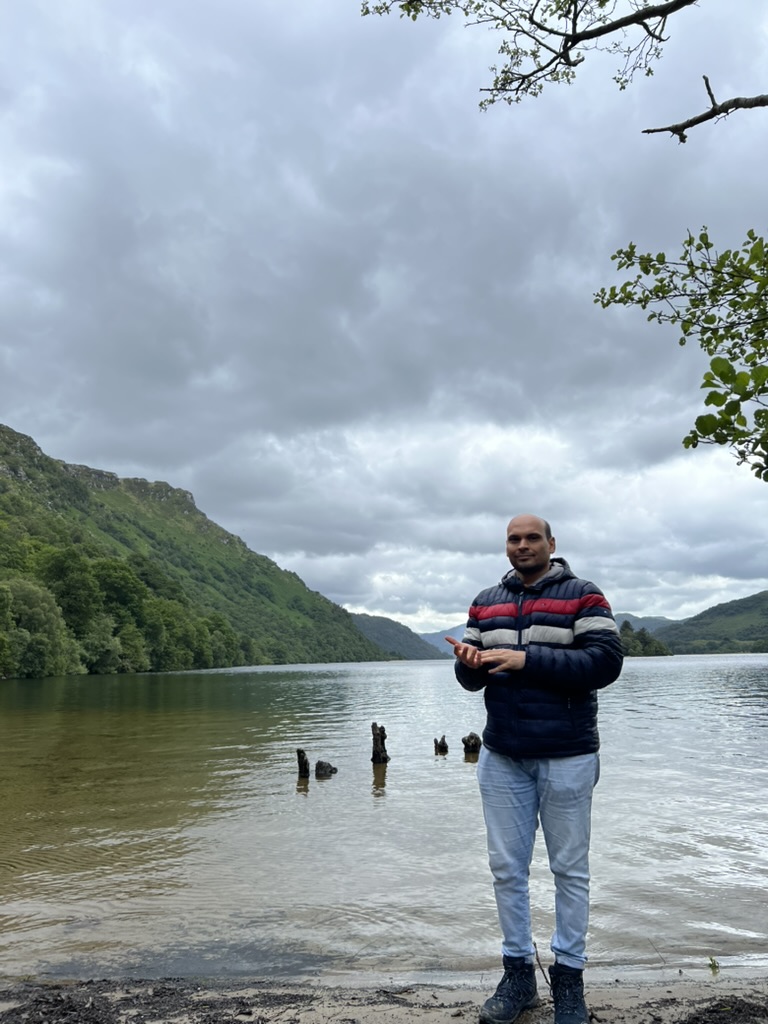
The reward at the end is Inverarnan specifically the Beinglas Farm campsite nearby. Cold drink, warm food, other walkers comparing blisters. Beinglas campsite is probably the best accommodation we stayed at on the entire walk. The staff and people around are friendly, and the food is excellent. We were grateful for all of it.
This day will take longer than you think. Don't underestimate the stone-puzzle sections. Start early, take your time on the climbs, and bring more blister plasters than you think you need.
Day 4: Inverarnan to Tyndrum
Day 3 changed our expectations of the WHW. What had seemed like a docile, relaxing but long walk was now riddled with memories of hurting legs. The blisters had not recovered enough overnight, which made it clear why this walk is considered challenging.
Beinglas Farm campsite is the right place to start from. A proper breakfast, food repacked, thermos filled. The mountain morning makes you forget the blisters and somehow instills the belief that nature will take care of what's next: let's just do the walk.
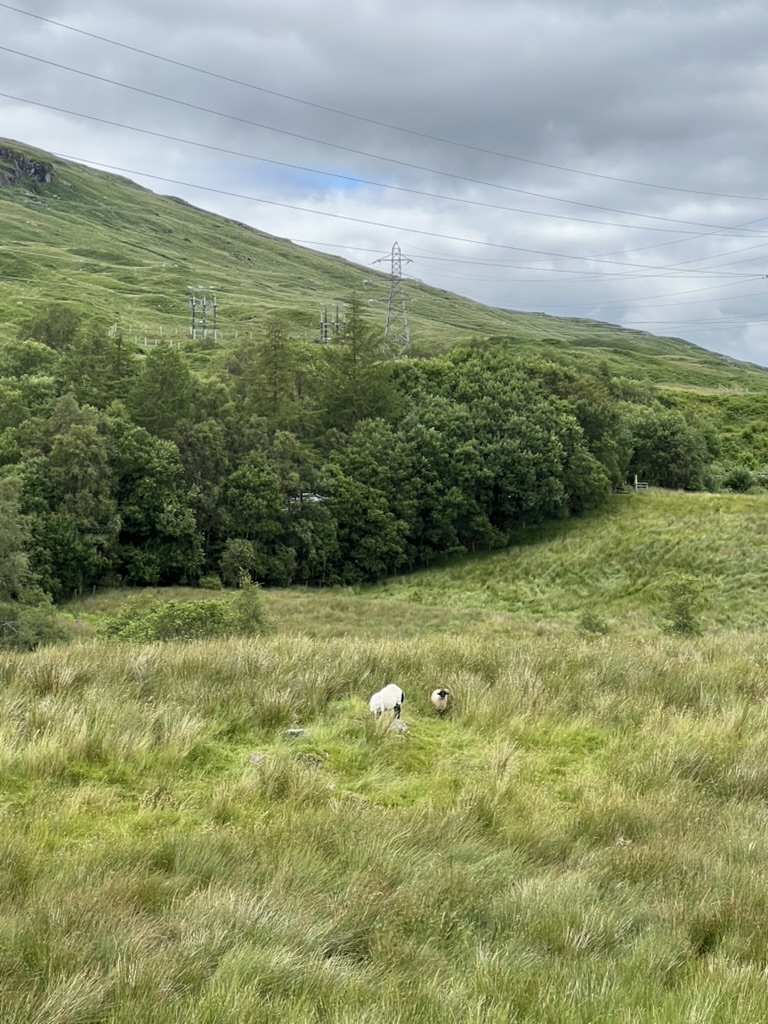
Day 4 is where the landscape shifts a little (or maybe just my mental map). Loch Lomond disappears and you lose your mental and visual connection to Balloch or Glasgow. The terrain is now filled with hills/mountains and you almost see the one that you are going to cross and one you came from. Sheep graze on slopes that go nowhere in particular.
The walk itself is kinder here. The ground is more forgiving than the stone puzzles of Day 3. We moved through stretches of deep green, past curious wildflowers growing in the verges, past structures long abandoned whose original purpose we could only guess at.
Tyndrum arrived just at the right time. Here again the last few kilometers make you suffer more than they should. Second time in our walk the day ended with hard showers. Tyndrum itself is a wonderful small village, with warm people, good food, and a well-stocked store to help you continue over the next days.
Day 5: Tyndrum to Inveroran
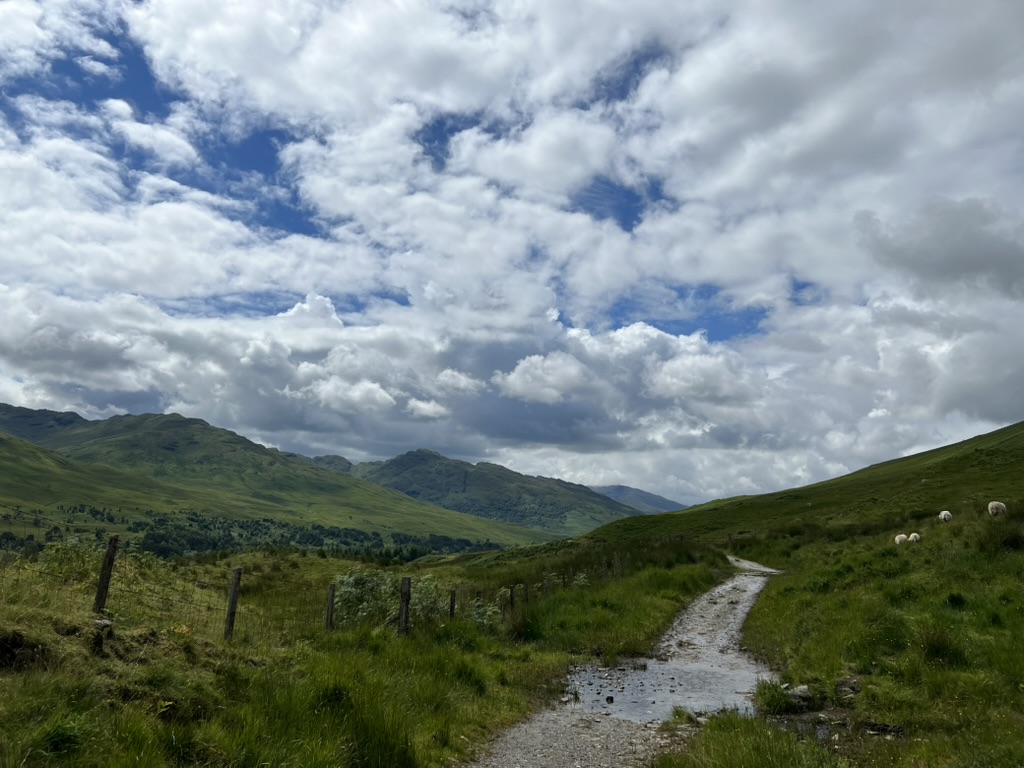
The path out of Tyndrum runs alongside a road and then a railway line. Trains pass in the distance. By Days 4 and 5, the walk becomes much sparser in terms of other walkers, with only occasional people passing by.
Bridge of Orchy arrives at the right moment. The hotel there is built for exactly this purpose: walkers who need to sit down, drink something, eat something, and briefly remember what it feels like to be inside. We did all of those things. We watched other groups come and go, each carrying the particular weather of the miles they had already walked.
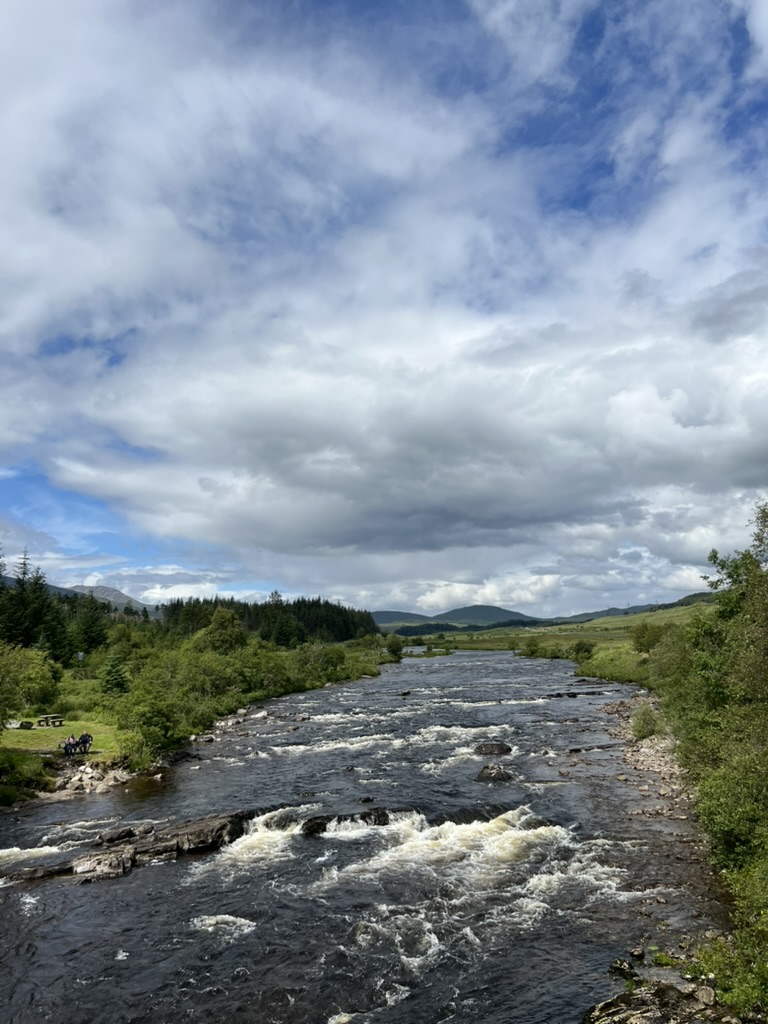
The stretch beyond Bridge of Orchy toward Inveroran feels longer than it should, but it is quite innocuous underfoot, although seeing very few people does make you feel slightly isolated.
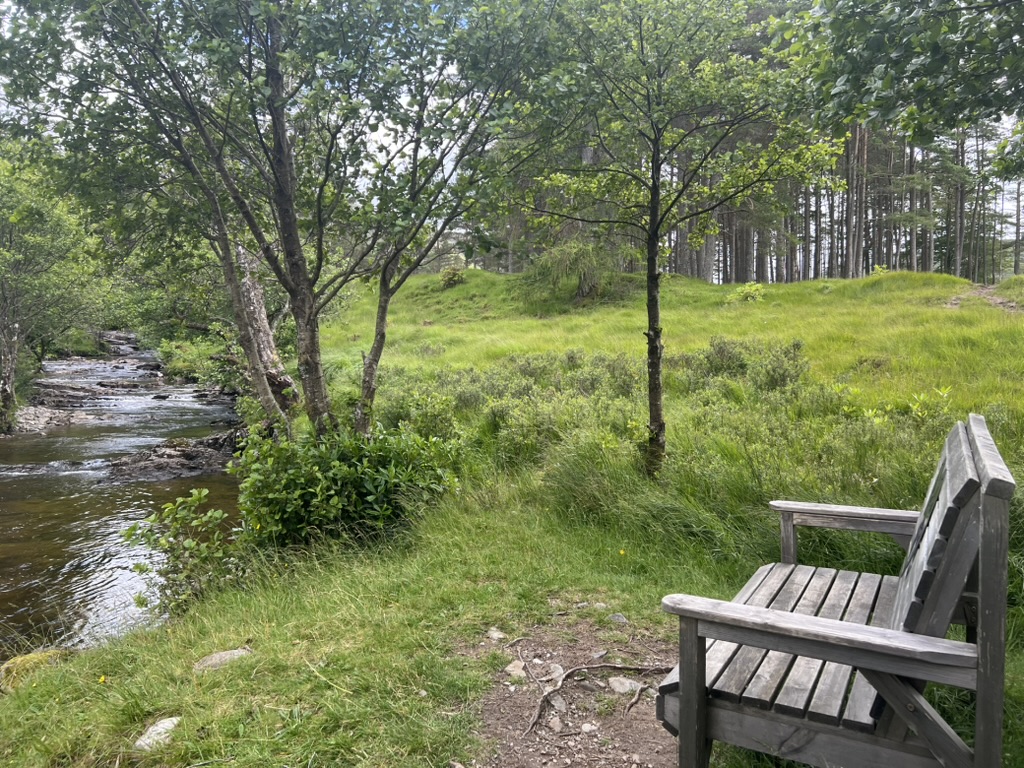
Hotel Inveroran appears at the end of a quiet road beside a stream, and the first thing anyone would notice is the bench in front of it. One could easily call it the nicest, calmest bench in the world.
Day 6: Inveroran to Kinlochleven
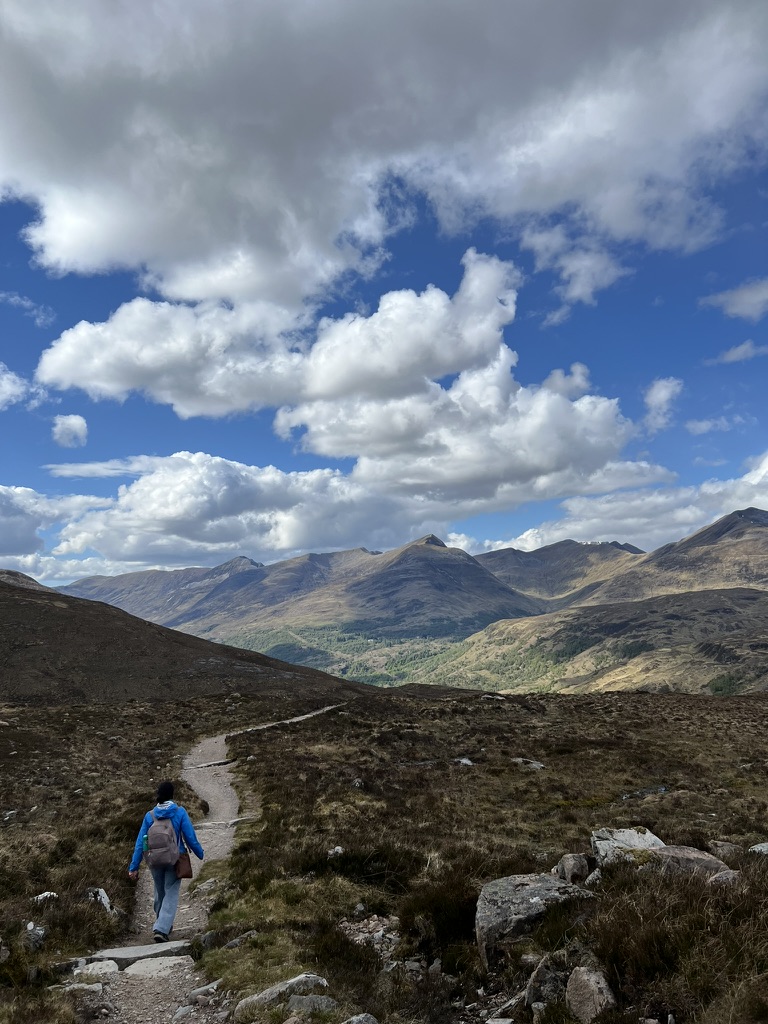
Days 6 and 7 are the longest days of the WHW. The stop at Hotel Inveroran, and the relative ease of Days 4 and 5, prepares you for the long days ahead. The start of Day 6 is quiet and pleasant and great for maintaining a gentle pace as you pass the camps of fellow walkers. We were on our way by 8, and the morning was crisp and clear.
Fueled by good weather, fresh legs, and the promise of a good half-mark stop at Kingshouse, we were able to maintain a good pace through the first half. The surroundings are busy with chaffinches, tits, and robins that seemed entirely unconcerned by our presence, and it takes very little effort to say hello to them on this part of the walk. Inveroran to Kingshouse was probably one of the easier parts of the entire WHW.
The road approaching Kingshouse shares itself briefly with cars heading to the Glencoe ski resort which may produce conflicting reactions: walkers and vehicles, both very briefly occupying the same thin strip of road before peeling off in separate directions.
Kingshouse seems like a one-hotel town on a highway, and it is very good at being exactly that. Hot food, cold water, somewhere to sit. We accepted all of it gratefully.
The other half of the day is in full contrast to the first half as it starts with the Devil's Staircase.
The name is apt and one may be tempted to google its history. The climb gets steep and zig-zaggy quickly and remains like that for a very long time. It is probably the steepest climb on the West Highland Way. The climb is enough to break pace for different walkers. The Devil's Staircase does not end your day. It happens in the middle of it.
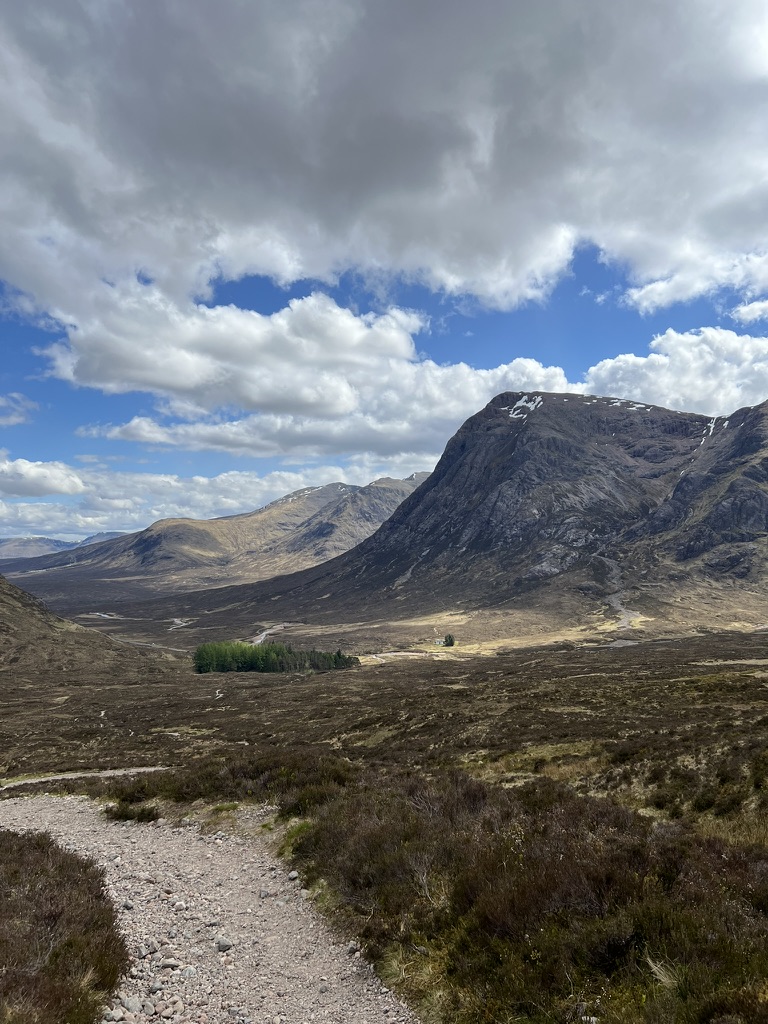
The views from the top are spectacular and full of perspective.
Once the descent begins, one may be tempted to relax assuming the worst is over, but in reality it is not. Descents are supposed to be hard on hamstrings and knees and if the internet did not tell you that then this descent does.
Kinlochleven starts to show up in the distance, offering a glimpse of relief, but it never seems to get any closer. We followed some fun shortcuts through the woods and found some that may or may not have been official.
Kinlochleven, when it finally came, was probably the most scenic town on the entire route. It is also closer to a proper town, larger than any stop since the very start, with real streets and real shops. We arrived exhausted and grateful and slightly astonished that we had walked that far in a single day.
Day 7: Kinlochleven to Fort William
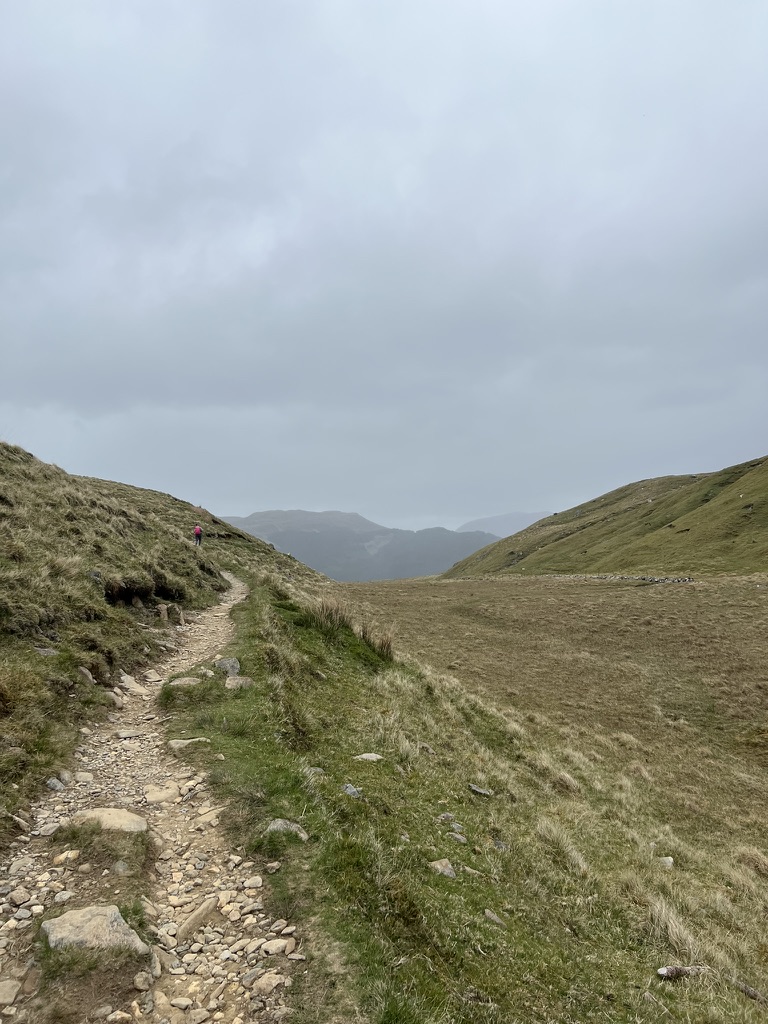
The last morning does offer the jubilation of knowing that the end is near and that this day is shorter than the previous one and therefore should be easier. No. I found this to be the hardest day of the entire walk. It's just that Day 3's trauma was so deep that I would still be willing to concede that Day 3 was tougher, but depending on my mood I would probably choose between the two.
Except for the first two days, which we had not planned, our plan was working out fine, except we did not realize that Day 7 fell on a Sunday and we had not stocked enough food for breakfast and lunch. The first half was spent finding closed cafes in Kinlochleven, and eventually we had to thank the Co-op for providing us with bread, dips, and pastries.
The number of fellow walkers had been thinning since Day 6. By this morning the path felt genuinely solitary. Day 7 is a long, slow-burning climb on narrow paths made of loose stones. There are no big puzzles to solve, but the path is still hard on the legs and feet. Sheep appeared and disappeared. At some point, crossing a stream that turned out to be less shallow than it looked, one of us briefly became part of it.
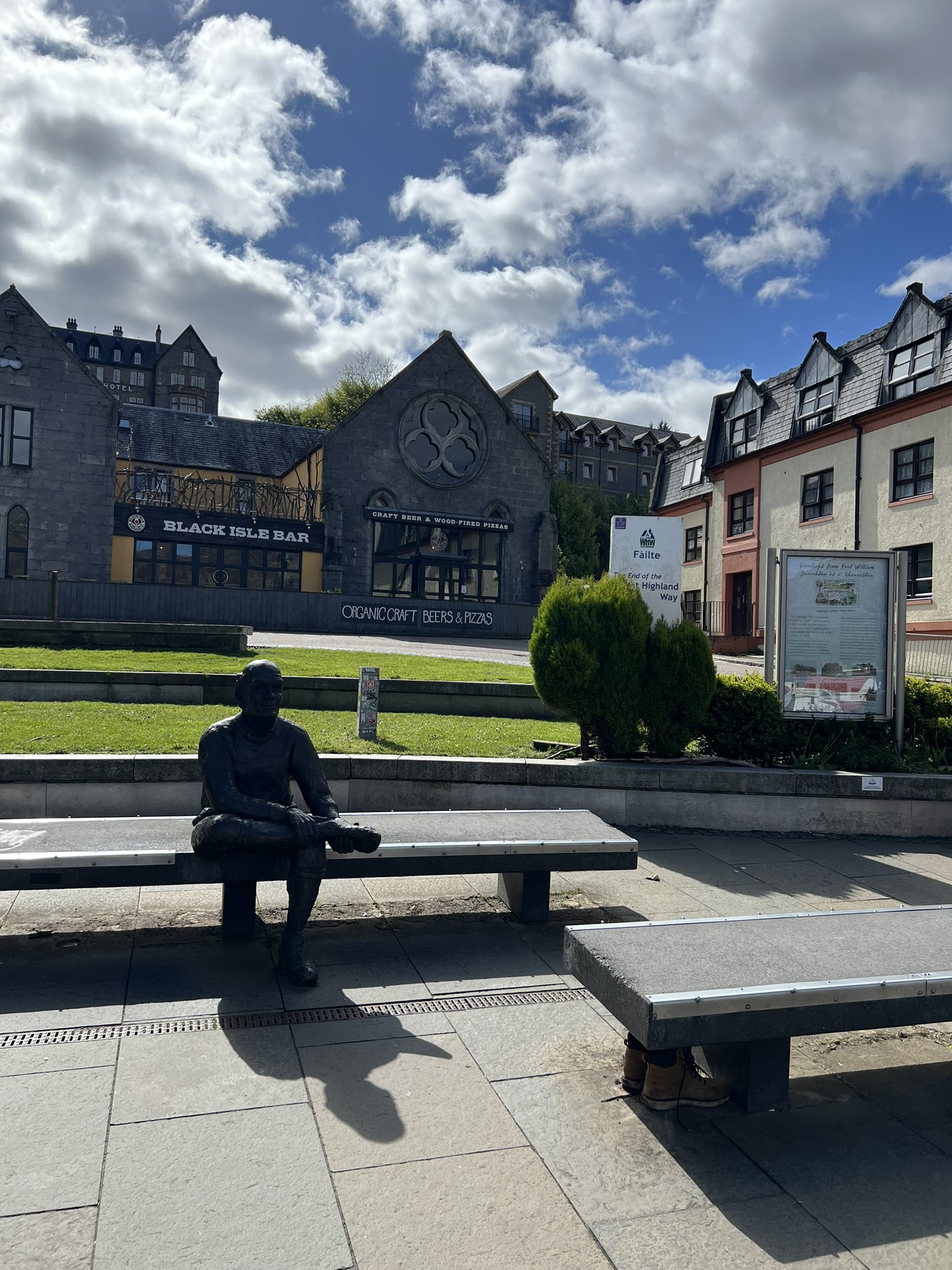
Around the thirteen-kilometer mark we found a spot and sat down with the baguette and cheese. Somewhere I had convinced myself that there were only climbs on this day, but that is not the case. Only around the seventeen- or eighteen-kilometer mark does the narrow rocky climb end. Along with it, the wilderness also ends. The last stretch offers sights of majestic Ben Nevis and the town of Fort William. Once Ben Nevis passes, it feels like this has to be the end, as if in a movie the climax is over, but Fort William is still a few kilometers away. The last stretch is a long walk through the town, past shops and restaurants, and finally to the Tired Traveler statue.
The name is exactly right. You arrive at it as the thing it depicts, worn through, relieved, a little disbelieving that it is actually over. We had our photos clicked by fellow walkers, and we did the same for them.